
Why Winter Breakdowns Are a Different Kind of Emergency
Getting stuck on a trail is something every off-roader experiences sooner or later. In summer, it’s usually an inconvenience—annoying, maybe frustrating, but manageable with time and teamwork. In winter, though, everything changes. Cold air, shorter daylight hours, icy terrain, and limited traction combine to make even simple problems far more serious. A dead battery at dusk, a snapped winch line in a snow-covered hollow, or a stuck rig in sub-freezing temperatures can rapidly shift from “we’ll figure this out” to “we need to be smart, fast.” Winter punishes hesitation, drains the body, and exposes weaknesses in your gear and planning. Understanding how to survive—and stay calm—during a cold-weather breakdown isn’t just good sense; it’s a critical winter wheeling skill. This article walks through what really matters when everything goes wrong in freezing conditions and how off-roaders can stay safe, even when the temperature drops and the trail turns against them.

The Moment It Happens: Staying Calm and Assessing the Situation
The first few minutes after something goes wrong on a winter trail are the most important. The human instinct is to jump out, rush around, and “fix it fast,” but winter punishes fast, frantic movements. Cold air steals warmth from your body the moment you leave the cab. The shock of the cold tightens your breathing and strains your focus. A calm, measured response is essential. The first task is always to assess the situation slowly and logically. Determine whether the issue is something mechanical, something related to traction, a dead battery, or something more severe. Look around, evaluate the terrain, check daylight remaining, and confirm communication options. When temperatures are below freezing, the smartest off-roader is the one who takes a breath first, not the one who grabs a tow strap first. That moment of calm helps prevent mistakes that could complicate the recovery even further.
The Cold Is Working Against You: Understanding the Risks to Your Body
Winter breakdowns aren’t just mechanical problems—they’re physical ones. The cold draws heat from your hands, feet, and face within minutes. Your dexterity fades quickly, and doing recovery work with numb fingers is dangerous. The body burns calories faster in cold weather, meaning you tire more quickly, become frustrated sooner, and lose clarity of thought. Shivering burns enormous amounts of energy. A task that normally takes three minutes can take twenty when your hands are shaking and your brain is fighting the cold. Recognizing that the cold itself is an adversary helps you approach the situation with more caution. Layer up before you step out of the rig. Put on gloves. Zip your jacket. Winter breakdowns slow down your body, and the key to staying safe is resisting the urge to rush.
Shelter First: Protecting Yourself Before You Touch the Vehicle
Before you ever grab a recovery rope or pop the hood, you need to ensure you won’t freeze during the process. In winter, shelter isn’t just for comfort—it’s survival strategy. If the rig still has battery power, using the heater for a few minutes before stepping into the cold helps prepare your body. Bring out your emergency blanket, hand warmers, or insulated coat. Create a warm base, even temporarily. If you’re with a group, organize gear inside someone’s cabin before starting the recovery outside. If you’re solo, keep the driver-side door cracked open for quick access back into warmth. The goal is simple: protect your core temperature. Winter recoveries often involve repeated steps—attach something, step back in, warm up, step back out. Maintaining warmth is more important than speed.
Assessing the Problem: Mechanical Failure vs. Traction Failure
Once you’re warm enough to work, it’s time to determine the nature of the breakdown. Winter creates issues that summer rarely does. Batteries die faster. Engines struggle to turn over. Fluids thicken and create weird noises. Ice can lock wheels, freeze winches, or turn dirt into slippery ledges. Sometimes the issue is obvious—the rig is buried in frozen mud up to the axles. Other times it’s subtle—a bad electrical connection behaving worse in the cold, or a fuel line gelling in a diesel rig. The important thing is to identify whether the vehicle can still move under its own power or whether a full recovery will be needed. Off-roaders who diagnose properly in winter save enormous time and energy. Misdiagnosis in freezing temperatures means wasted effort—and wasted calories.
Traction Problems: Frozen Ground, Ice Pockets, and Winter Mud
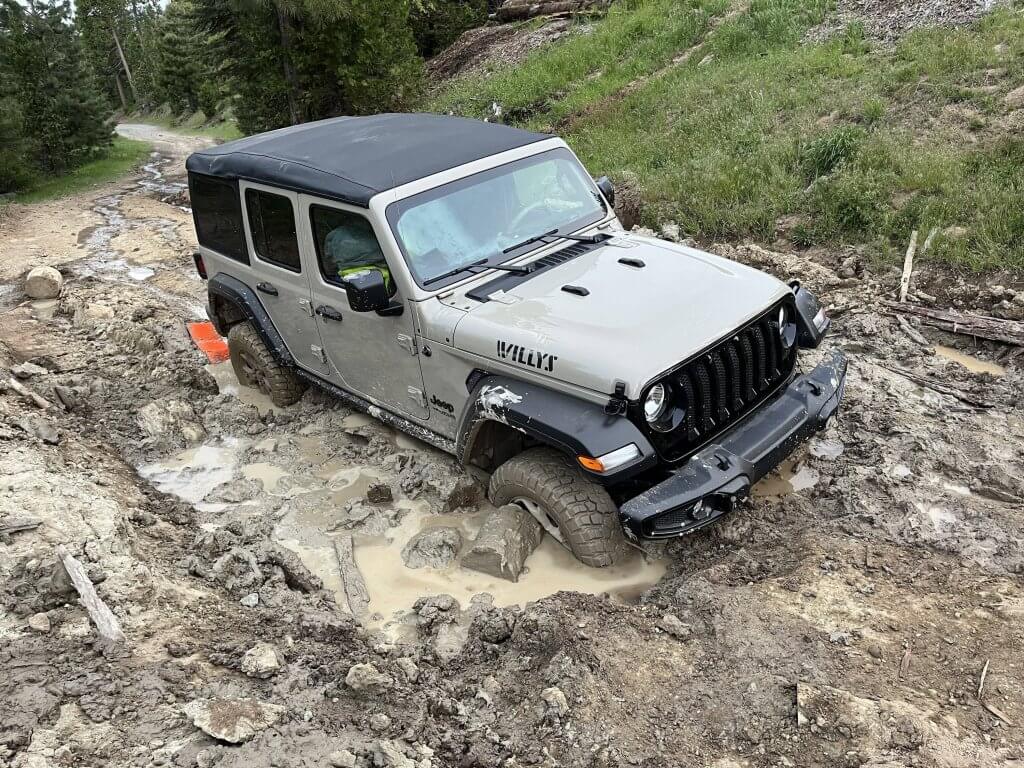
Winter traction issues feel different from anything in summer. Frozen mud doesn’t behave like soft mud. It has more structure, more suction, and more weight. Tires dig less and slide more. Frozen ruts hold you hostage. Ice hides beneath thin layers of mud and prevents tires from gripping. When dealing with traction failures in the cold, the key is controlled, deliberate movement. Rocking gently, applying minimal throttle, and letting the tires bite gradually works better than aggressive attempts. Clearing away frozen mud around the tires helps reduce suction. Digging channels through ice pockets helps prevent sideways sliding. Patience is your friend here. Rushing only buries the vehicle deeper or causes sideways movement that makes the situation worse.
Mechanical Failures: Cold-Weather Weak Points Revealed
Winter has a way of revealing weaknesses in rigs that summer hides. A battery that was “fine” in October might fail in January. Belts stiffen and crack. Winches freeze internally. Synthetic ropes become rigid and difficult to handle. Transmission shifts feel rough as cold fluid thickens. Everything is harder, slower, and more fragile in freezing temperatures. If the breakdown is mechanical—such as a snapped belt, dead alternator, failed starter, or locked-up component—you need to evaluate whether repairs are possible in the cold. Sometimes the smartest choice isn’t to fix the problem on the trail but to stabilize the rig and call for help or wait for your group’s support. Knowing your limits, and your rig’s limits, is essential.
Communication Becomes Your Lifeline: Reaching Out Before Conditions Worsen
Communication is the most underrated part of winter wheeling. In freezing weather, time is a resource you cannot afford to waste. If you suspect you won’t get out quickly—because of the terrain, mechanical failure, or falling light—it’s critical to notify someone early rather than late. Radios, GMRS, and the VAOR SOS network become essential tools. Cell batteries die extremely fast in the cold, making it important to keep your phone inside your jacket or inside a warm cabin. Even if you don’t need help yet, giving someone your location and status ensures that if things escalate, you won’t face the situation alone. Good communication prevents small problems from turning into dangerous ones.
Working With a Group: Winter Recovery Is a Team Effort
When breakdowns happen in winter, teamwork becomes the most powerful tool available. In freezing temperatures, every person plays a role: one person spots, another handles gear, another stays warm and ready inside the rig, and another watches for hazards. Rotating roles helps prevent cold exhaustion and maintains focus. Winter recoveries require controlled coordination. You can’t afford rushed spotting or sloppy winch rigging when the ground is icy and visibility is low. The best teams operate slowly and communicate clearly, even if the cold is uncomfortable. A unified, calm group recovers a stuck vehicle far more safely than a chaotic one
Winching in the Cold: Why Winter Pulls Are More Dangerous
Winching in winter requires a different level of respect. Synthetic winch ropes become stiff and less flexible, making them harder to spool correctly. Steel cables become painful to handle with bare hands and colder to the touch than expected. Ice can accumulate on the winch drum, causing uneven spooling or cutting into the rope. Cold D-rings and shackles contract slightly, making them harder to manipulate. The risk of line failure increases because both the rig and the terrain are less forgiving. When winching in winter, accuracy matters more than speed. Anchor points must be more secure. Angles must be cleaner. Tension must be smoother. Winter is not the season for sudden yanks or sloppy rigging. Clean, slow pulls are the safest method.
What Happens When the Sun Goes Down: The Race Against Falling Temperatures
Winter brings early sunsets—sometimes as early as 4:45 p.m. in parts of Virginia. When the sun disappears, temperatures plummet. A workable breakdown can become dangerous quickly. Lighting becomes essential. Cold batteries drain faster, making headlights and auxiliary lighting more important than ever. The forest becomes quieter, colder, and harder to navigate. If you’re stuck late, it often becomes more strategic to focus on shelter and communication than to attempt a risky recovery in the dark. Sometimes the best decision is to warm up inside the rig, reassess your resources, and plan methodically instead of fighting through the cold.
If You Can’t Recover the Vehicle: Strategies for Overnight Survival
In the rare case where recovery isn’t possible before nightfall, survival becomes the priority. Staying warm takes precedence over everything else. Insulated blankets, winter clothing, and anything that traps body heat become essential. Running the vehicle intermittently for warmth is safer than idling all night—constant idling risks running out of fuel or introducing carbon monoxide danger in confined conditions. Eating calorie-dense foods helps maintain body temperature. Staying dry is critical. Wet clothing in winter can be lethal. Letting someone know your precise location before settling in gives rescuers a clear route if needed. Most off-roaders will never face an overnight winter situation, but those who do understand how important preparation is.
Preventing a Winter Breakdown: The Best Strategy Is Always Preparation
Every winter recovery story has a lesson behind it—usually that a small amount of preparation could have prevented the entire situation. Winter punishes neglect more than any season. The battery you put off replacing. The shovel you meant to pack. The gloves you forgot at home. The winch line you didn’t inspect. The fuel level you let drop lower than usual. Most winter breakdowns don’t happen because the trail is unusually dangerous. They happen because winter amplifies weaknesses and demands more from both driver and rig. Off-roaders who prepare their gear, inspect their vehicle, pack emergency supplies, and plan their route have a dramatically safer and more enjoyable winter wheeling experience.
Conclusion: Winter Breakdowns Test Skill, Patience, and Preparation
A breakdown in freezing weather is one of the most challenging experiences an off-roader can face. It tests your equipment, your decision-making, your teamwork, and your patience. But it also teaches resilience and builds confidence. Winter off-roading is not for the unprepared, but for those who embrace its challenges, it offers some of the most memorable stories and the strongest lessons. The key to surviving a cold-weather breakdown is simple: stay calm, protect your body, communicate clearly, work methodically, and never let the cold rush you into mistakes. With the right mindset and the right preparation, even the harshest winter breakdown becomes manageable—and safely survivable. Virginia’s trails are beautiful in winter, but they demand respect. When off-roaders honor that, winter wheeling becomes both safer and far more rewarding.


No responses yet