
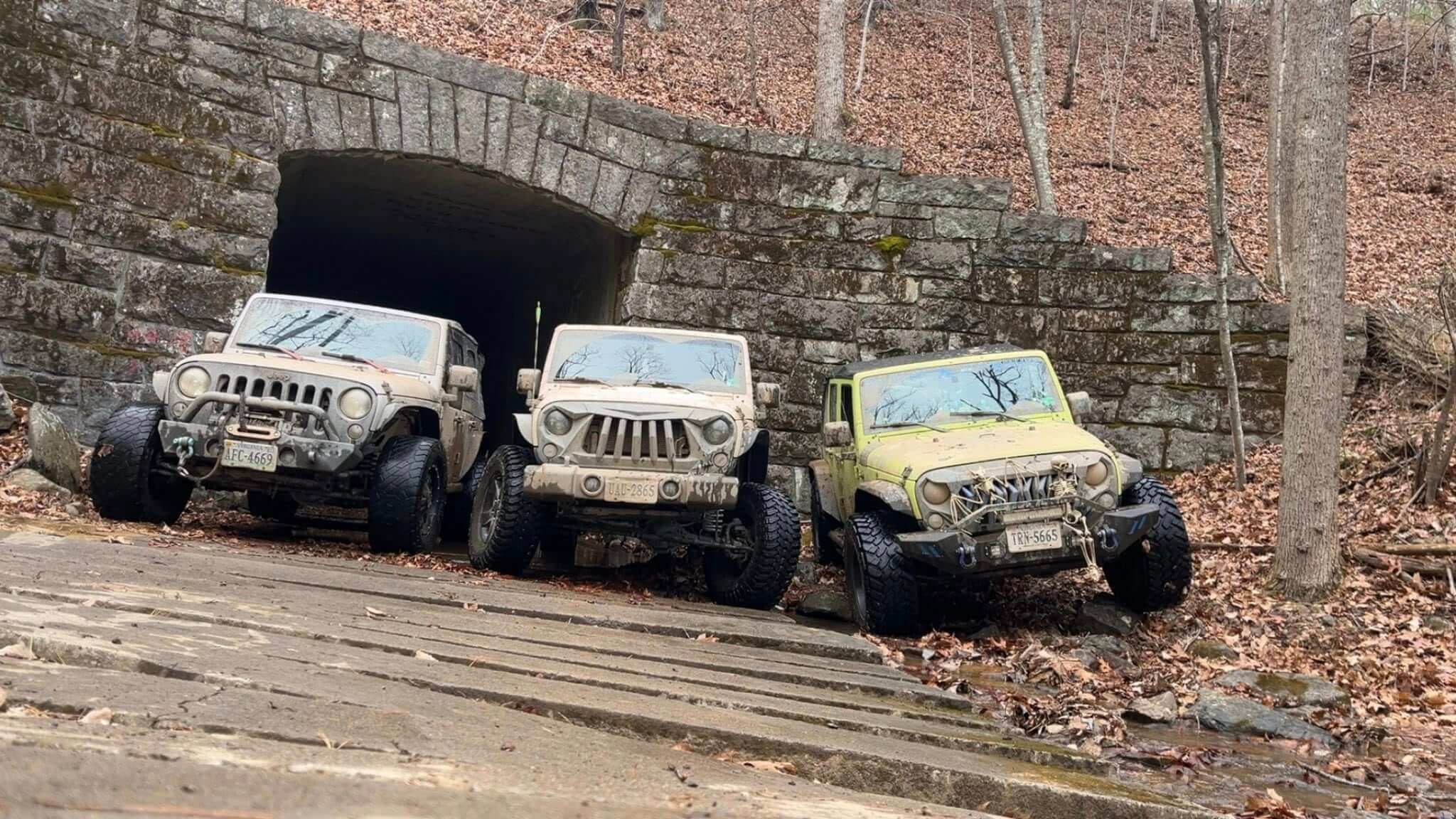
Virginia off-road trails have a way of humbling people quickly. It doesn’t matter how new the build is, how aggressive the tires look, or how many online videos someone has watched before showing up. The Commonwealth’s terrain has a reputation for exposing confidence gaps long before mechanical limits are reached. Many drivers learn this lesson early, and those who don’t usually learn it the hard way.
Unlike wide-open landscapes where speed and visibility can compensate for mistakes, Virginia trails are intimate and unforgiving. Trees crowd the trail edges, turns come faster than expected, and elevation changes hide obstacles until you are already committed. Overconfidence thrives on predictability, and Virginia rarely offers it. What looks dry at the trailhead may be slick clay two miles in. What seems like a casual forest road can tighten into a shelf route with nowhere to turn around.
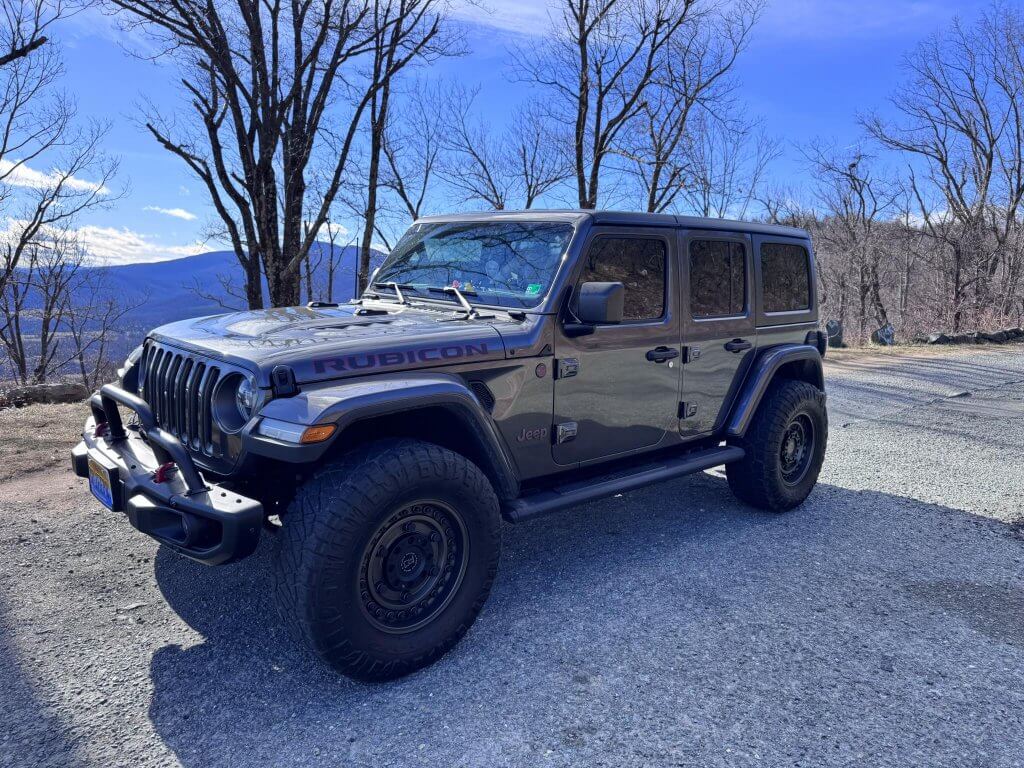
Mud is often misunderstood by those new to Virginia wheeling. It isn’t the dramatic splash-through type that rewards throttle and momentum. More often, it is dense, sticky, and deceptive. Tires that claw effortlessly in sand or snow can suddenly become smooth rollers once clay packs into every tread void. Drivers who assume power will pull them through quickly discover that restraint and tire placement matter far more than horsepower.
Rain changes everything in Virginia, sometimes within minutes. Trails that felt manageable on the way in can become borderline dangerous on the way out. Rocks that offered grip suddenly feel polished. Roots—already notorious—become slicker than ice. Overconfidence shows itself when drivers ignore these changes, pushing forward as if conditions are static. Experienced Virginia wheelers know that stopping, reassessing, or even turning around is not a sign of weakness. It is often the smartest decision available.
Virginia also punishes the belief that vehicle upgrades replace experience. Lockers, lifts, and large tires are valuable tools, but they do not teach line choice, patience, or spatial awareness. Narrow trails force drivers to think about approach angles not just for obstacles, but for trees, embankments, and drop-offs. A misjudged line may not lead to dramatic failure, but it can result in body damage, trail damage, or a stuck vehicle that blocks the route for everyone else.
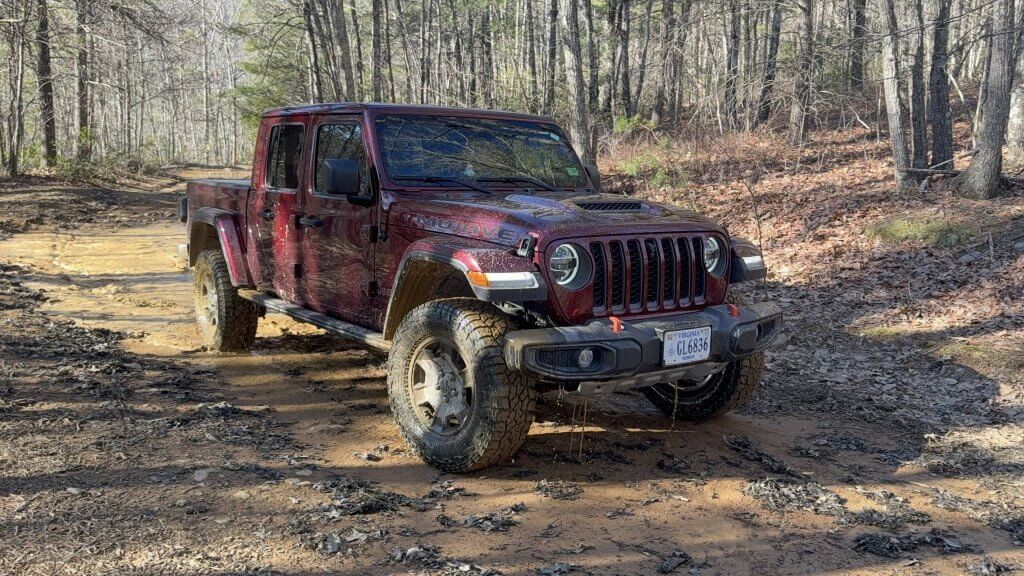
Weather and terrain work together in ways that reward humility. Fog can erase depth perception. Leaves can hide holes. Snow and ice turn familiar trails into something entirely different. Drivers who rely on confidence alone often underestimate how quickly conditions compound. Those who slow down, communicate with spotters, and adjust expectations tend to finish the day with better outcomes—even if they cover fewer miles.
Another factor that exposes overconfidence is recovery reality. In many parts of Virginia, help is not immediate. Cell service is unreliable, access roads are limited, and tow services may be hours away or unable to reach the trail at all. Recovery often depends on the group you arrived with and the preparation you brought. Drivers who assume “someone else will handle it” learn quickly why self-sufficiency and teamwork matter here.
Virginia’s trail system also carries a shared responsibility that overconfidence tends to ignore. Trail damage caused by excessive throttle, bypass creation, or reckless driving affects access for everyone. Land managers notice patterns, not intentions. The culture that developed around Virginia off-roading recognizes this reality. It encourages skill-building, education, and patience because preserving access matters more than proving a point on any single obstacle.
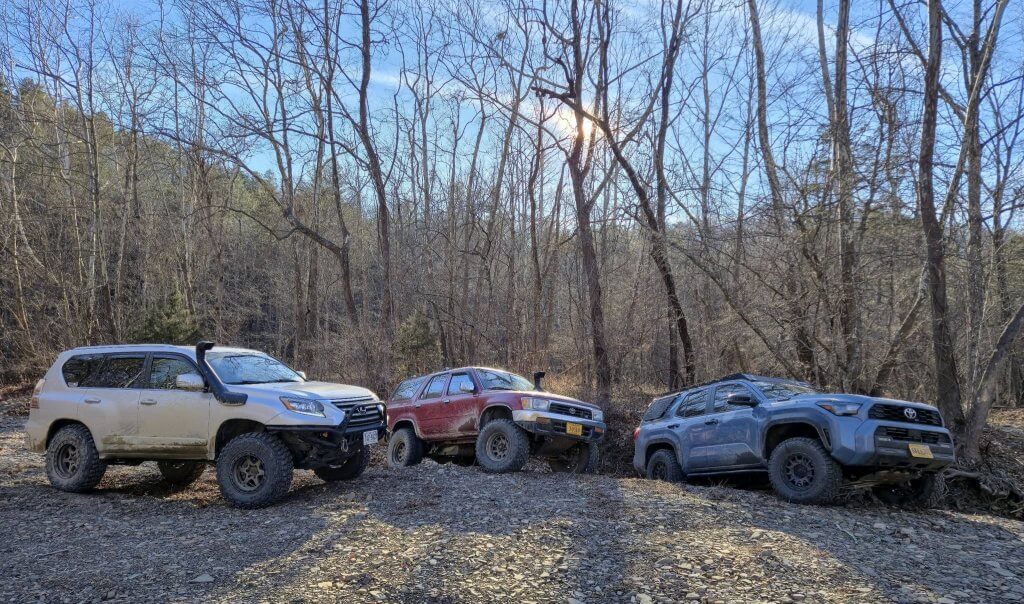
What surprises many newcomers is that Virginia doesn’t demand fear—it demands respect. Drivers who approach trails thoughtfully often find them incredibly rewarding. The challenge becomes mental rather than mechanical. Reading terrain, anticipating changes, and understanding when conditions are shifting become part of the experience. That learning curve is steep, but it produces more capable drivers in the long run.
In the end, Virginia trails don’t care how confident you feel. They respond only to decisions made in real time, under changing conditions, with real consequences. Horsepower can help in specific moments, but humility carries you through entire days. Those who embrace that lesson tend to enjoy Virginia off-roading far more than those who fight it.
Virginia doesn’t punish confidence because confidence is bad. It punishes unchecked confidence—the kind that ignores terrain, weather, and responsibility. The drivers who thrive here are the ones who balance capability with caution, ambition with awareness, and excitement with respect. That balance, more than any modification, is what keeps wheels turning and trails open across the Commonwealth.


One response
Can’t over emphasize the impact of weather. The terrain will exacerbate existing mud holes, water crossings and can create havoc on the steeper section of the trails-sometimes creating entirely new sections of moving water. For Virginia or other wooded trails, wind, Ice and Snow always means someone has to bring a saw. Recovery gear, as mentioned, is a driver responsibility-kinetic and towing straps and lines; winches are great but not everyone has one-good to have someone in the group to be outfitted with one and experienced in its use. First aid is also a driver responsibility-a small basic ouch pouch as a minimum, more is better and having basic first aid is a must for someone in the group. We are fortunate to have many EMT, Fire and law officers that trail with us. Some of our veteran and active duty service members have also come to the rescue on several rides I have been on. Never trail alone is my strong recommendation. We
may not have some of the dramatic boulder ups and downs like out West but overconfidence can be a cruel teacher and these old mountain trails will continue to offer lessons to the unprepared or inattentive. Have fun and safe trailing out there!